Saturday, March 19, 2022

Maturity Method to Monitor the Strength Development of Concrete


Maturity is a non-destructive approach to testing concrete that allows you to estimate the early-age compressive strength of in-situ concrete in real-time. Adopting the maturity approach on the jobsite eliminates the need for concrete cube/cylinder break tests, allowing to greatly optimize the construction schedule.

ASTMC1074, the standard practice for maturity, defines the method as: a technique for estimating concrete strength that is based on the assumption that samples of a given concrete mixture attain equal strengths if they attain equal values of the maturity index.

Maturity Index: It represents the progression of concrete curing. The maturity index value considers concrete temperature and curing time. As a result, mix calibration is required to implement this concept in a project. The goal of the calibration is to determine a relationship between maturity and strength for a specific mix.


As the Figure shows, estimation of maturity index requires a plot of temperature versus curing age of the concrete. 

The maturity method based on the ASTM C1074 is the most commonly used method to estimate the in-situ strength of concrete. The ASTM C1074 provides two maturity functions: 1) Nurse-Saul function; and 2) Arrhenius function. Based on the Nurse-Saul method, there is a linear relationship between the maturity and the temperature in real time. The underlying assumption is that the strength development in concrete is a linear function of hydration temperature. The Nurse-Saul Equation shows the relationship between maturity and hydration (curing) temperature history, as follows.

M(t)= [(Ta-T0)t]

Where: M(t) is the maturity index at age t; Ta is the average temperature during time interval t; T0 is the datum temperature. ASTM C1074 provides a standard procedure to find the datum temperature for a specific mix design. However, most of previous studies suggest a practical estimation of the datum temperature that is between 0 °C and -10 °C. Indeed, this is the temperature at which the hydration of cementitious paste stops; hence the strength development of concrete ceases. In most cases that is taken as 0°C. Ta is simply obtained by the maturity monitoring system at a given time. ∆t is the default value given by the frequency of measurements taken by the maturity meter and is usually defined as 1 hour, 30 min, or less. The maturity Index is defined as the area under the curve for a certain age and calculated using the above equation. The unit is: °C.h 

Maturity-Strength Calibration of Concrete Mix: This calibration can be used to determine the in-place strength of the concrete and evidently replace the need for field-cured cubes/cylinders. To perform a maturity calibration, the ASTM C1074 standard must be followed. Here are the five steps in calibration process.


Step - 1: Make a minimum of 17 cubes/cylinders; 2 will be used for temperature monitoring while the other specimens will be used for compressive strength breaks. All cubes/cylinders must be cured together in a moist environment (ASTM C511).

Step - 2: Select a minimum of 5 break times, for example, 1, 3, 7, 14, 28 days. For each day, obtain the compressive strength of two cubes/cylinders, break the third cube/cylinder if the results vary more than 10% from the average. Note the time of the breaks.

Step - 3: At the time of the break, obtain the maturity index value from the two cubes/cylinders that were used for temperature monitoring and make an average of the maturity.

Step - 4: On 28th day, there will be five data points, where strength is associated with the maturity index. Plot the values to fit into the following equation, as shown in the Figure above:

Strength  =  a + b.log(maturity index)

It should be noted that this is a semi-log plot, with maturity index on x-axis.

Step - 5: Validate the calibration curve by making a couple of additional cubes/cylinders on the next pour, compare the calculated strength obtained from the maturity value to the compressive strength obtained in the lab. Up to a 10% difference is acceptable.

The principal goal of this method is to help estimation of early strength of in-place concrete (up to 14 days). It does not replace the standard laboratory testing of concrete for compressive strength.

Benefits of Maturity:  
The benefits of using maturity as contrasted with traditional quality control procedures are as follows: 
• It provides a real-time, in-place indication of the strength of the concrete. 
• It is a non-destructive testing method as contrasted to breaking cubes/cylinders in the laboratory. 
• It provides early quality verification of the in-place concrete, often within hours of its placement. 
• It accelerates the construction process.  
• It reduces the quantity and cost of sampling and testing by reducing the number of cubes/cylinders that need to be cast and broken to determine strength. 
• The maturity method is readily assessable to most materials laboratories because it is based on traditional cylinder compressive strength tests for its development. 
Weaknesses of Maturity: 
 The maturity method also has its weaknesses. 
* Changes in the brand of cement, the source and type of fly ash, the source of the aggregate or the water to cement ratio can result in a change in the strength-maturity relationship and require a new calibration curve. 
* The method cannot account for humidity conditions during curing, that is, if there is not enough moisture present for hydration to occur the strength gain will not be realized as predicted by the maturity curve. 
* It is not accurate when there are large temperature swings during the curing process. 
* The method also cannot account for concreting practices that result in inadequate consolidation, poor placement techniques, inadequate curing, lack of protection during early ages, or fluctuations in air content.

Reference: "Concrete Maturity - From Theory to Application", e-book, Giatec Scientific Inc., 2018, 1st Edition, Ebook ISBN: 978-1-9994762-0-5


** 


Tuesday, December 24, 2019

CEMCON 2019: Conference on Modern Trends in Construction Technology & Concrete


CEMCON 2019, the two day conference on Modern Trends in Construction Technology and Concrete was organised at Pune (India), on 13-14 December 2019. 

Dr J D Bapat made a presentation on "Cement-Based Building materials". Four types of Cement-Based Building Materials were presented, namely Dry Mixed Mortar (DMM) Plaster, Cement-Based Fly Ash Bricks, Autoclaved Aerated Concrete (AAC) Blocks and Micro Concrete for Concrete Repair Work. 

The conference was attended by nearly delegates from construction industry. 12 experienced professionals from construction industry made their presentations. All presentations were followed by interesting q/a session, which saw very active participation. 


Visit Dr J D Bapat's website: Cement Manufacturing & Concrete

**


Saturday, January 19, 2019

Self-Compacting Concrete (SCC)


The Indian Concrete Institute (ICI), Pune Center, organised a tech-talk on Self-Compacting Concrete (SCC), on 12 January 2019. I was one of the panelists. The brief on the proceedings are as follows:

(a) SCC versus Flowing Concrete: The basic difference between the two is in terms of bleeding and stability. When SCC is selected on the basis of technical requirements like the flow of concrete through closely spaced reinforcement or the uniformity, it cannot be substituted by flowing concrete.

(b) Ensuring Stability of SCC: Stability is the property of fresh concrete to prevent segregation. In many projects, SCC is preferred for stability, despite higher production cost. The conventional method of improving stability is to increase the fines content, using high volumes of filler, reactive (like fly ash) or inert. However, higher fines (paste) content has potential to increase shrinkage and creep. Hence, in some cases, SCC is designed with less fines content (close to normal concrete) and stability is improved, adding viscosity modifying agent (VMA). 

(c) SCC Mix Design: Follow European Guidelines for Self-Compacting Concrete as given by EFNARC (www.efnarc.org).   
The fluidity and viscosity of the paste is adjusted and balanced by careful selection and proportioning of the cement and additions, by limiting the water/powder ratio and then by adding a super plasticiser (SP) and (optionally) a viscosity modifying admixture (VMA). It reported that modern poly-carboxylate (PC) based SP does not require addition of VMA. Correctly controlling these components of SCC, their compatibility and interaction is the key to achieving good filling ability, passing ability and resistance to segregation. The paste is the vehicle for the transport of the aggregate; therefore the volume of the paste must be greater than the void volume in the aggregate so that all individual aggregate particles are fully coated and lubricated by a layer of paste. This increases fluidity and reduces aggregate friction. The coarse to fine aggregate ratio in the mix is reduced so that individual coarse aggregate particles are fully surrounded by a layer of mortar. This reduces aggregate interlock and bridging when the concrete passes through narrow openings or gaps between reinforcement and increases the passing ability of the SCC.

(d) SP and VMA Mixtures: The mixture of SP and VMA is available in the market. It is advised not to use such mixture. Whereas SP is added to SCC to improve flowability, VMA is added to improve stability and both need to be controlled independently. 

View Dr J D Bapat's website

Join Dr J D Bapat on Twitter: @cemcretecon , @drjdbapat 

Join Dr J D Bapat on Linkedin

**


Sunday, June 30, 2013

Pulverized Fuel Ash (PFA) or Fly Ash (FA)


The “pulverized fuel ash” (PFA) or the so-called fly ash (FA), used as a mineral admixture in cement and concrete, is a product of the pulverized coal firing system, through conventional boilers, mostly used in the thermal power plants. While carbon burns in oxidizing surroundings, the inorganic mineral matter gets sintered and liquefied at high temperature. The melt flows down the walls of the furnace and about 25% gets collected as “bottom ash” (BA). It is crushed before disposal. The rest, PFA or FA, gets entrained in the up-flowing hot gas in the form of fine particles, which get trapped in the economizer, air-preheater, mechanical separator, and, finally, battery of electrostatic precipitators (ESP).

As a general practice in many countries, PFA and BA are mixed with water and transported to ash ponds/lagoons. The ash thus deposited in lagoons is called “lagoon ash” (LA) or “pond ash.” It causes problems besides occupying huge stretches of agricultural land. Notwithstanding the greater utilization of PFA (and BA) in recent times in cement and concrete, in bricks, and for land filling, a large quantity of ash still lies unutilized.

As per several estimates, the cement industry contributes about 5% of the global generation of carbon dioxide. The cement industry’s sustainable program developed by the World Business Council for Sustainable Development (WBCSD) prepared an “Agenda for Action” for a 5 year period from 2002 to 2007, endorsed by the leading cement manufacturers of the world. The agenda addressed the issues of (a) climate protection, (b) fuels and raw materials use, and (c) emission reduction besides other issues.

Ref: “Mineral Admixtures in Cement and Concrete”, CRC Press (http://www.crcpress.com/product/isbn/9781439817926). Author: Dr J D Bapat (http://www.drjdbapat.com)
Written for engineers, book focuses on making more workable and durable concrete using mineral admixtures. For each mineral admixture, book looks at manufacturing and processing, physical characteristics, chemical and mineralogical composition, quality control, and reported experiences. It also examines the provisions of national standards.It encourages engineers to more effectively use these and other wastes in cement and concrete to support more sustainable growth of industry. Buy this book online to obtain 20 % discount and free shipping. Download details: http://bit.ly/online_purchase

*


Tuesday, July 17, 2012

ASTM Standard on limestone blended cement


ASTM International has published ASTM C595-12, Standard Specification for Blended Hydraulic Cements.

The recent revision defines requirements for a new cement type:  Type IL, portland-limestone blended cement, which includes more than 5% and up to 15% limestone as an ingredient. 

This technology has the potential to reduce environmental impact of cement production by about 10% while maintaining performance characteristics concrete producers are familiar with. Similar cements have been used in Europe and other places around the world for several decades and have demonstrated the performance and durability expected in concrete products.

For the most recent editions of the specifications, please visit the following websites:

*

Wednesday, March 14, 2012

Concrete to prevent floor covering failures


Developed and patented by USC Technologies, Inc., a wholly-owned subsidiary of U.S. Concrete,Inc, Aridus(R) Rapid Drying Concrete is the first ready-mix concrete solution for preventing floor covering failures, an industry-wide problem that cost millions of dollars annually in damage, downtime, repair and replacement.

The moisture from concrete is often overlooked as a leading cause of concrete floor covering failures. Aridus(R) proprietary concrete mix helps prevent moisture problems by drying faster than conventional concrete mixes, allowing flooring materials to be installed on concrete in 30 days or less.

*

Thursday, February 2, 2012

A lesson for structural engineers


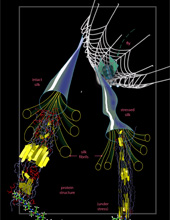
While researchers have long known of the incredible strength of spider silk, the robust nature of the tiny filaments cannot alone explain how webs survive multiple tears and winds that exceed hurricane strength.

Now, a study that combines experimental observations of spider webs with complex computer simulations shows that web durability depends not only on silk strength, but on how the overall web design compensates for damage and the response of individual strands to continuously varying stresses.

Engineered structures are typically designed to withstand large loads with limited damage, but extreme loads are more difficult to account for. The spider has uniquely solved this problem by allowing a sacrificial member to fail under high load. One of the first questions a structural engineer must ask is ‘What is the design load?' For a spider web, however, it doesn't matter if the load is just strong enough to cause failure, or one hundred times higher--the net effect is the same. Allowing a sacrificial member to fail removes the unpredictability of 'extreme' loads from the design equation."

For detailed information on NSF-supported research elsewhere in Massachusetts, see results for Massachusetts on Research.gov.

Ref: NSF Press Release 12-016:  A Spider Web's Strength Lies in More Than its Silk


Monday, January 2, 2012

Holcim patent: using waste heat from clinker cooler


Switzerland based Holcim Technology Ltd filed patent application for method for treating alternative, carbon-containing, low-caloric waste materials for use in furnace systems. The inventors are Ernst Frank and Obrist Albert.

According to the Controller General of Patents, Designs & Trade Marks, "In a method for treating alternative, carbon-containing, low- caloric waste materials for use in furnace systems, in particular rotary tubular kilns for the production of clinker, the carbon-containing, alternative fuels are subjected to high- temperature gasification under anoxic conditions at temperatures above 1000C, wherein water, water vapor or CO2 is injected to ensure a reaction forming CO and H2. The waste heat from a clinker cooler is used for the high-temperature gasification."

*

Monday, December 19, 2011

Replacing concrete with recycled plastics


Axion International, a New Jersey-based company founded in 2007 that has developed a process to make a building material that is strong enough to supplant steel and concrete but is made out of discarded laundry detergent containers and milk cartons. The material, a plastic polymer that is essentially a mix of shredded heavy plastics and a bit of fiberglass, was developed by Thomas Nosker, a professor of engineering at Rutgers.


*

Wednesday, December 14, 2011

Pervious concrete


Here are two latest ACI documents on pervious concrete


This report provides technical information on pervious concrete's application, design methods, materials, properties, mixture proportioning, construction methods, testing, and inspection. Available in hard copy or PDF format. $67.50 (ACI members $41.00); Order Code 52210.EM.
  

This report provides technical information on pervious concrete's application, design methods, materials, properties, mixture proportioning, construction methods, testing, and inspection. Available in hard copy or PDF format. $34.50 (ACI members $21.00); Order Code 522108.EM.

*


Saturday, July 25, 2009

Bandra-Worli Sea Link (India)


Bandra Worli Sea Link Project, a marvel of architecture and engineering,

is one of the most highly recommended projects of all the transport studies done for the metropolitan region during the last forty years. The sea link consists of approach viaducts and two aesthetically pleasing cable-stayed bridges. The link, which is 5.86 km long, 8-lane freeway connecting Worli and Bandra, will serve the purpose of providing an additional fast moving outlet from the South Mumbai to the Western Suburbs and thereby providing much needed relief to the congested Mahim Causeway. Widely noticed by the media , it is an architectural marvel


1. Major Components of the Sea-Link:

a) 449 m long embankment with 20 m wide promenades for 16-lane toll plaza.

b) 800 m long precast segmental approach bridge on Bandra side.

c) 600 m long cable stayed bridge 125 m high towers including transition spans.

d) 200 m long precast segmental approach bridge between Bandra cable stayed bridge and Worli cable stayed bridge.

e) 350 m long Cable Stayed Bridge on the Worli with Pylons including transition spans

f) 1400 m Precast Segmental Approach Bridge on Worli Side.

g) 811 m long link to Khan Abdul Ghaffar Khan Road comprising 510 m Precast Segmental Bridge and 310m Cast-in-Situ Bridge.

h) Setting up Traffic Monitoring, Surveillance, Information and Control Systems.

i) Drainage, Street Lighting, Signage Making, Landscaping and Arboriculture.

2. Major Steps Involved in Bridge Erection

a) Soil Investigation and Load Test on Piles

b) Foundation Construction

c) Sub Structure Construction

d) Super Structure Construction

d) Cable Stayed Bridges

3. Salient features:

a) An 8-lane bridge with 2 lanes dedicated for buses.

b) Unique bridge design for the Link Bridge to emerge as a landmark structure in the city.

c) Single tower supported 500 meters long Cable Stayed Bridge at Bandra Channel and Twin tower supported 350m Cable Stayed Bridge at Worli Channel for each carriageway.

d) Modern toll plaza of 16 lanes with automated toll collection system.

e) State-of-art systems for traffic monitoring, surveillance, information and guidance, instrumentation, emergency support etc.

4. Project benefits:

a) Savings in vehicle operating cost to the tune of INR 1000 million per annum due to reduction in congestion in the existing roads and lower vehicle operating cost on the bridge.

b) Considerable savings in travel time due to reduced accidents, increased speed and reduced delays at intersections at existing roads.

c) Improvement in environment especially in terms of reduction in carbon monoxide, oxides of nitrogen and reduction in noise pollution in areas of Mahim, Dadar, Prabhadevi and Worli.

d) No adverse effect on fisheries, marine life and livelihood of fisherman.

e) Proper landscaping measures along the approaches and promenade along waterfront to enhance environment of the area.

f) Ease in driving with reduced mental tension and overall improvement in the quality of life.

5. Mumbaikars’ View:

One design feature: the massive steel rails on either side, completely block out the sea scenario. A sweeping, uplifting view of the sea was what thousands of Mumbaikars were counting on. The crash barriers-which designers say are essential for safety-have effectively crashed these hopes.


The superintending engineer of the MSRDC, Vivek Ghanekar, explains that the railings are scientifically designed. The metal, bars and shape of the barriers are built in such a way that in case of an accident, it is the barriers that will bend, minimising damage to the car's body. But, counter scores of people who have traveled abroad, cable-stayed bridges built in Europe and America are equally safe and offer spectacular views of water.


Bombay city is blessed with not one but two long coastlines on either side but the city dwellers hardly see the sea except for little stretches at Marine Drive, Haji Ali and Juhu. For an overcrowded city like Mumbai, the sea is a liberating feature and should not be cut off, many feel.

6. Future Extension:

The Reliance Infrastructure, in consortium with Hyundai Engineering of Korea, has emerged as the preferred bidder for the Western Freeway project -- an extension of the Bandra-Worli Sea Link in Mumbai. Once the project is awarded, the company will take over the 6 km Bandra-Worli Sea Link and construct a further 5.5-km long extension over sea between Worli and Haji Ali--estimated to be completed in four years. The cost is of the project is pegged at INR 5,1000 million.

Watch a video :

Ref: Haldania R., “ Cable stayed bridges” Project Report, Departement of Civil Engineering, IIT Bombay, Powai, India


Friday, June 5, 2009

Roller compacted concrete (RCC): pavements

A roller-compacted concrete (RCC) pavement takes its name from the construction method used to build it. It's placed with conventional or high-density asphalt paving equipment, then compacted with rollers. RCC is used when strength, speed of construction, and economy are primary needs. It is commonly used at port, inter-modal, and military facilities; parking, storage, and staging areas; streets and intersections; highway shoulders; and low-speed roads. It can also be used in a composite system as a base material.
 
RCC has the same basic ingredients as conventional concrete: cement, water, and aggregates, but unlike conventional concrete, it's a drier mix—stiff enough to be compacted by large vibratory rollers. RCC pavements need neither forms nor finishing, nor do they contain dowels or steel reinforcing. These characteristics make RCC pavements simple, fast, and economical. Coupled with long service life and minimal maintenance, RCC's low initial cost adds up to economy and value. 

Strengthens Cement, Reduce Cracks, Increase Workability, Non-Toxic


*

Sunday, February 15, 2009

Self-cleaning Concrete:

Self-cleaning buildings and pollution-reducing roadways: these may sound like futuristic ideas but they are realities of some of today’s concrete. Recently introduced formulations of cement are able to neutralize pollution. Harmful smog can be turned into harmless compounds and washed away. The concrete can be imparted self-cleaning properties, using a special type of cement, the so called 'Photocatalytic Cement'. It uses photocatalytic process for the in situ degradation of polluting compounds. The cement is used in the same manner as regular Portland cement, gray or white. These products provide value through unique architectural and environmental performance capabilities. The cement gains the special properties incorporating fine particles of semiconductor material, titanium dioxide, during the process of manufacture.

There are two major cement companies distributing this type of cement in the United States. Italcementi, the Italian parent company of Essroc Cement, originally brought this product to market. They have recently licensed Lehigh White Cement Company to produce and market the material in Europe and North America. In the U.S., the photocatalytic cement is marketed under the brand name 'TX Active' available as gray or white Portland cement Type I, II, or III complying with ASTM C150. In Canada, TX Active is available as gray or white Portland Cement Type GU, MS, and HE, complying with CSA A3001. The product is offered in two formulations. The first, 'TX Arca', offers the self-cleaning properties against atmospheric compounds that stain concrete over time. The second, 'TX Aria', adds depolluting qualities to the self-cleaning properties of TX Arca.

Question:

Discuss the importance of imparting self-cleaning properties to concrete in the current scenario.

Self-cleaning surfaces:

TiO2-containing photoactive materials represent an appealing way to create self-cleaning surfaces, thus limiting maintenance costs, and to promote the degradation of polluting agents. Several mortars containing anatase TiO2, added as suspension or as powder, were characterized: among the photocatalytic mortars, the use of a combined additive (both powder and suspension) improved the material response. The best photoefficiency was exhibited by a mortar containing TiO2 as surface covering; nevertheless, the adhesion problems shown by the surface layer open the way for future widening of investigations focused on the optimization of layer durability. Read more .. ..


Self-cleaning Concrete: Action

The self-cleaning action of concrete is due to photocatalytic reaction that occurs on the concrete surface. This promising technique utilizes nano-sized particles of semiconductor materials like TiO2, ZnO, WO3, FeTiO3 and SrTiO3 to carry out photo-induced oxidation process to disassemble volatile organic compounds (VOC) into CO2 and H2O and completely mineralize NOx and SOx. Due to its high efficiency and the generation of harmless byproducts, the concept of the photocatalytic process has therefore caught the attention of many researchers and environmentalists all over the world. When the semiconductor is exposed to UV light or even sunlight, the REDOX reaction occurs at the surface of the catalyst particle generating ●OH or hydroxyl radicals and O-2 or oxygen ions. These two powerful oxidizing agents will then disintegrate and rearrange the structure of the VOC and convert them into CO2 and H2O. As sunlight hits the surface, most organic and some inorganic pollutants are neutralized. They would otherwise lead to discolored concrete surfaces.

The primary ingredient of smog, ozone, is an extremely reactive gas molecule that reacts chemically with lung tissues, causing decreased lung function, respiratory infection, lung inflammation and aggravation of respiratory illnesses. The raw ingredients for ozone are nitrogen oxides (NOX)—produced primarily by internal combustion engines—and volatile organic compounds (VOCs)—
hydrocarbons that have evaporated from chemical plants, refineries, factories, gas stations and paints. Ozone is created when the two raw ingredients are
combined in the presence of heat and sunlight. Italcementi tests have demonstrated that a road paved with concrete made with the photocatalytic cement can reduce NOX levels by 20 to 80%, depending on atmospheric conditions. A building with photocatalytic precast concrete cladding can do the same. Because the proprietary compound oxidizes both NOX and VOCs, it combats ozone at the source. The other chemicals known to be oxidized using photocatalytic cement include:
* Inorganic compounds such as SOX, CO, NH3 and H2S
* Organic compounds such as alcohol, acids and aromatics
* Chlorinated organic compounds such as dioxins and chlorobenzene
* Pesticides such as diazinon and atrazine

The titanium-based catalyst is not spent as it breaks down pollution, but continues to work. Typical products are oxygen, water, carbon dioxide, nitrate and sulfate.

Question:

Mention three applications of semiconductor photocatalysis


Self-cleaning Concrete: Applications

The Photocatalytic Cement is already being used for sound barriers, concrete paver blocks, façade elements. Other applications include:

* Precast and architectural concrete panels
* Pavements, road surfacing and sidewalks
* Portland cement-based plaster for finish coat applications
* Concrete masonry units, roof tiles and cement-based tiles
* Cement-based restoration products

The best applications, for cost effectiveness, include any product used in thin layers or produced in a two-stage manufacturing process (with structural and face mixtures).

In one of the more innovative applications, Italcementi has successfully partnered with lighting system makers to develop artificial lighting systems that generate enough ultraviolet light to activate the photocatalytic process. The lighting system and photocatalytic cement concrete have been used in the renovation of a heavily trafficked tunnel in Rome.

The Photocatalytic cement has already been used in North America. A white precast concrete carillon tower was constructed at Dalton State College in Georgia. The 23 m tall tower is the centerpiece of a new quadrangle project and is visible from a nearby freeway, so it is important that it remains pristine.
Hyacinth Place, an affordable “green” housing complex in Highland Park, IL, has courtyard areas with concrete pavers incorporating photocatalytic cement. The pavers help clean the air as well as store and filter storm water that would have normally been nuisance runoff. The photocatalytic cement was used to
produce two 9 m tall gateway elements at the entrances to the new I-35 W bridge in Minneapolis, MN. These gleaming white concrete sculptures represent the
international symbol for water and serve as markers to remind travelers they’re crossing the Mississippi River. With the help of advanced technology and energy from the sun, they will remain proud symbols for decades to come.

The rain washes away the pollution from the concrete surface, hence buildings stay cleaner and do not require chemical applications that are potentially harmful to the environment. Maintenance costs are reduced. This is true even for buildings in highly polluted locations. One noted application is the Air France headquarters at Roissy-Charles de Gaulle International Airport near Paris, a white concrete building that has remained white. Another is the Church of the Year 2000 in Rome.

Clean buildings are great. Perhaps even more astounding environmental benefit is the potential for cleaner air. Concrete products that are exposed to sunlight throughout their life, like precast building panels, pavers and roof tiles, are especially suited to manufacture with photocatalytic cement. For instance, city streets made with special pavers are capable of reducing the pollution at its source—where it comes out of the tailpipe.

Question:

Discuss techno-economic feasibility of using Photocatalytic Cement in a building project

Reference:

(1) Barbesta M. and Schaffer D, "Concrete that cleans itself and the air", Concrete international, February 2009, pp 49-51


Friday, February 13, 2009

Bacterial Concrete

Concrete is the most used, strong and durable building material in the world. It is known that Concrete has a large load bearing capacity for compression load but it is weak in tension. The steel reinforcement bars (rebars) are embedded in concrete to impart tension bearing capacity. The reinforcement takes over the load when concrete structure is subjected to tension and prevents deformation, deterioration (i.e. crack development) and failure. The concrete, on the other hand, prevents corrosion of steel bars, protecting them from attacks of deteriorating agents from the environment, such as chlorides, sulphates, carbon dioxide. These deteriorating agents are responsible for causing cracks, make concrete more permeable and ultimately result in corrosion of reinforcement. The lower the permeability the higher is the durability of concrete. Thus to make the structures durable, either the cracks that have formed are repaired later or in the design phase extra reinforcement is placed in the structure to ensure minimum deformation under tension so that crack widths stay within a certain limit. This extra reinforcement is then only needed for durability reasons (to keep the crack widths small) and not for structural capacity. The extra steel is not desirable, keeping in view the current steel prices. It is not desirable from the sustainability considerations also. Thus a reliable method to automatically repair cracks in concrete will increase and ensure durability and functionality of concrete structures substantially. On the other hand, it will reduce the cost extra reinforcement. The bacterial concrete helps in doing that.

Bacterial Concrete: Biomineralisation

The bacterial concrete makes use of calcite precipitation by bacteria. The phenomenon is called microbiologically induced calcite precipitation (MICP). The pioneering work on repairing concrete with MICP is reported by the research group of Prof. Ramakrishnan V. and others (see bibliography) at the South Dakota School of Mines & Technology, USA.

The MICP is a technique that comes under a broader category of science called biomineralization. It is a process by which living organisms or bacteria form inorganic solids. Bacillus Pasteruii, a common soil bacterium, can induce the precipitation of calcite. Under favorable conditions Bacillus Pasteruii, when used in concrete, can continuously precipitate a new highly impermeable calcite layer over the surface of the already existing concrete layer. The precipitated calcite has a coarse crystalline structure that readily adheres to the concrete surface in the form of scales. In addition to the ability to continuously grow upon itself, it is highly insoluble in water. It resists the penetration of harmful agents (chlorides, sulphates, carbon dioxide) into the concrete thereby decreasing the deleterious effects they cause. Due to its inherent ability to precipitate calcite continuously, bacterial concrete can be called as a “Smart Bio Material” for repairing concrete. The MICP comprises of a series of complex biochemical reactions. It is selective and its efficiency is affected by the porosity of the medium, the number of cells present and the total volume of nutrient added. The phosphate buffer or urea-CaCl2 have been found effective as nutrients. The bacteria precipitate calcite in the presence of nutrients. The optimum pH for growth of B. Pasteurii is around 9. The alkaline environment of concrete with pH around 12 is the major hindering factor for growth of bacteria. However, B. pasteurii has the ability to produce endospores to endure an extreme environment, as observed by Prof. Ramakrishnan and the research team.

The microbial modified mortar or concrete has become an important area of research for high-performance construction materials. Ghosh et. al. investigated the effects of incorporating a facultative anaerobic hot spring bacterium on the microstructure of a cement–sand mortar. Environmental scanning electron
microscopic (ESEM) views and image analysis (IA) of the bacteria modified mortar (thin-section) showed significant textural differences with respect to the control (without bacteria) samples. X-ray diffraction (XRD) study confirmed the formation of new phases of silicates (Gehlenite) within the matrix of such mortar material, which cause an improvement in the strength of the material. Electron probe microstructure analysis (EPMA) suggested that the bacterial treatment promoted uniform distribution of silicate phases and increased the calcium/silicon (C/S)ratio within CSH gel of the matrices. The bacterium is found to leach a novel protein, which is capable of isolating silica from its source. The addition of such isolated protein, instead of the bacteria, into mortar also improves the strength of mortar.

Reference:

Ghosh S., Biswas M., Chattopadhyay B. D., Mandal S., "Microbial activity on the microstructure of bacteria modified mortar", Cement & Concrete Composites, Vol. 31, 2009, pp 93–98


Bacterial Concrete: Applications

Giancarlo Ranalli, an Italian researcher in Pesche, Italy, has already used bacteria to clean the base of Michelangelo's Pietà Rondanini in Milan and another kind of bacteria to remove harmful animal glue from frescos in Pisa. Ramirez also describes the use of forensic DNA techniques to identify burrowing insects in wooden pieces from just minuscule droppings or a tiny body part so that the precise species can be identified and properly eradicated, as well as the use of biomineralization process(same as that used in making the bacterial concrete) in which microbes, introduced to a crack in a stone sculpture, will deposit a calcium carbonate that picks up the color of the original while filling the gap.

"Science has finally set a solid foot in the art world," says José Luis Ramirez, co-author of a 2005 study of the use of biotechnology in art preservation and director of the United Nations University's Program for Biotechnology for Lain America and the Caribbean (BIOLAC), which is an interdisciplinary school that promotes the use of biotechnology in fields from agriculture to manufacturing.

Bibliography:

1. Bang, S.S., Galinat, J.K. & Ramakrishnan, V. Calcite precipitation induced by polyurethaneimmobilized Bacillus pasteurii, Enzyme and Microbial Technology 28 (2001) 404–409
2. Rodriguez-Navarro, C, Rodriguez-Gallego, M., Chekroun, K.B. and Gonzalez-Munoz, M.T. Conservation of Ornamental Stone by Myxococcus xanthus-Induced Carbonate Biomineralization, Applied and Environmental Microbiology, Apr. 2003, p. 2182–2193.
3. Ramikrishnan, V., Panchalan, R.K. and Bang, S.S. Improvement of concrete durability by bacterial mineral precipitation, in Proc. ICF 11, Torino, Italy, 2005.
4. Ramakrishnan V., Ramesh K. P., Bang S. S., “Bacterial concrete”, Proceedings of the Society of Photo-Optical Instrumentation Engineers (SPIE), The International Society for Optical Engineering, Bellingham, WA, Vol. 4234, 2001, pp. 168-176
5. Stocks-Fischer, S., Galinat, J. K., and Bang, S.S., “Microbiological precipitation of CaCO3”, Soil Biology and Biochemistry, Vol. 31, 1999, pp. 1563-1571
6. Gollapudi, U.K., Knutson, C.L., Bang, S.S., and Islam, M.R., “A New method for Controlling Leaching through Permeable Channels”, Chemosphere, Vol. 30, No. 4, 1995, pp. 695-705
7. Zhong, L., And Islam, M.R., “A New Microbial Process and its Impact on Fracture Remediation”, 70th Annual Technical Conference and Exhibition of the Society of Petroleum Engineers, Dallas, Texas, Oct 22-25, 1995.
8. Harmon K.,"The Science of Saving Art: Can Microbes Protect Masterpieces?",
Scientific American, February 9, 2009

Question:

Discuss possible applications of bacterial concrete


Monday, January 19, 2009

Energy efficient buildings

Energy efficient buildings

Dr J D Bapat

The public sector must be the front-runner in raising energy-efficiency standards for buildings, according to 45 European cities that have come together to contribute to a review of EU laws regarding the energy performance of buildings.

The cities, from 18 EU member states, have united in pursuit of sustainable communities by integrating energy-efficiency improvement techniques and the use of renewable energy sources. They argue that the revamped Energy Performance of Buildings Directive should oblige authorities to display energy-performance certificates in visible places in all public buildings. In addition, all new public buildings should exceed national regulations by a certain percentage, they recommend.

The key recommendations include:

  • Lowering the current 1000m2 threshold required for buildings undergoing a major renovation in order to meet specific efficiency standards,
  • Including final energy-use figures, as well as the corresponding primary energy-use and CO2-emissions ratings, in energy performance certificates, and;
  • Creating a certified professional category, introducing certification to guarantee the quality of inspections and energy-performance certificates.


The EU has set 20% emissions reduction goal by 2020. Preliminary findings indicate that the first 26 cities alone should achieve CO2 emission reductions of 21,000 tonnes per year.


The initiative, launched by the EU executive, comprises 18 projects across Europe working to become as self-sufficient regarding energy supply as possible, all of which could contribute to the revised directive. For example, the four French cities participating in the initiative managed to raise standards nationally by introducing higher standards into local tender processes.


Source: EurActiv.com, 16 January 2009

Question:

Discuss various ways in which buildings could be made energy efficient

Concrete home of the future:

Concrete home of the future should incorporate a range of concrete attributes, to promote concrete as a sustainable building material. Read more .... ....


Thursday, January 15, 2009

Housing for all CII formula

Housing for All : CII formula

Dr J D Bapat

The prevailing high interest rate has dampened the overall demand and has severely affected the purchasing power for housing , thus making it a distant dream of a common man. The 5% subsidy approved by the Union Cabinet, Government of India, for Economically Weaker Section(EWS) and Low Income Group (LIG) is thus a move in the right direction which will serve the twin objective of providing much needed relief to general masses and at the same time boosting demand in the economy. The Confederation of Indian Industries (CII) has called for supplementary measures to further strengthen it.

The cost and the availability of the land is a major bottleneck in making housing affordable. Land is limited in cities and cost of land is growing exponentially. There is, therefore, an urgent need to increase the supply of land at affordable prices. CII has particularly suggested:
  • Increase the Municipal Limits of the Existing Cities : The city centers in India are already saturated in terms of space and capacity of infrastructure. The land that is available in the necessary magnitude is in the periphery of the cities. In order increase the supply of land, one of the most effective solutions is to increase the municipal limits of the existing cities. However, this needs to followed with a very committed, time-bound programme to upgrade the infrastructure of the expanded areas, particularly the accessibility through public transport.

  • Simplify the process of conversion of land from agricultural to residential/ commercial : The land that is available in periphery of cities most of the time is agriculture land.The development of a residential project in such areas would require the conversion of land from agricultural to residential/ commercial. This process represents a major procedural bottleneck and needs simplification.

  • Provide infrastructure status to Integrated Township Development: Another measure would be to encourage development of tier II and III cities and the construction of integrated satellite townships. The supply of well developed and commercially viable supply of land would bring down the prices in the current markets. A major recommendation in this respect is to provide infrastructure status to Integrated Township Development.

  • Relax Floor Space Index (FSI) policy with a thrust to develop existing infrastructure: The FSI policy, if liberal, could open up a supply of land in the existing city centers.

  • Allocate specific land in the Master Plan for economically weaker section (EWS) of the community: This land could be made available at a reasonable rate to developers to build affordable housing meant for economically weaker section of the society.

In addition to the above, CII has also suggested that government should consider either waiving off or substantially reducing the stamp duty for EWS and also promotion of appropriate low cost housing technologies.

With the phenomenal increase in population and urbanisation, the shortage of housing is expected to increase from 24.7 million dwelling units in 2007 to 26.5 dwelling units by 2011. 90% of the shortage of housing is in the urban segment. Any fillip to this segment of housing will spur economic activities, stimulate demand and generate employment.

Question:

What is your formula to make housing affordable to urban middle class ?


About Me

My photo
Adviser and Development Professional for Cement Manufacturing, Concrete and Construction. Arbitrator. Motivational Speaker.